Buy vs lease — the real math for a new authority
Cash purchase, financed purchase, TRAC lease, operating lease. Which one makes sense at each stage, and the two lease structures that quietly steal your business.
The four ways to get a truck
- 1Cash purchase — you own it outright.
- 2Financed purchase — traditional loan, you own it after the last payment.
- 3TRAC lease (Terminal Rental Adjustment Clause) — lease with a residual buyout, treated as a purchase for tax.
- 4Operating lease / rent-to-own — you don't own it, monthly payment includes maintenance.
Each fits a different stage and financial situation. There is no universal "right" answer — but there are two structures that quietly destroy new carriers.
Cash purchase — the boring winner
If you have $30k–$60k in cash and can absorb a $5k unexpected repair without panic, cash is almost always the right move for a first truck.
Pros:
- Lowest CPM (no payment)
- No insurance requirement for physical damage (technically optional, but recommended)
- You own the title day 1
- Easiest to sell if the business doesn't work
Cons:
- Ties up capital you might need for reserves
- No "credit building" for the LLC
When it makes sense: you have $50k+ in liquid savings, you can put $30–40k into a solid used truck and keep $10k+ for reserves.
Financed purchase — the default for most new carriers
Traditional loan through a bank, credit union, or truck dealer's finance arm.
Realistic 2026 terms for a new authority (no business credit history):
| Term | Rate | Notes |
|---|---|---|
| 24–36 months | 9–14% | If you have 700+ personal credit |
| 48–60 months | 11–18% | Most common for used truck |
| 72 months | 14–22% | Rare, extended terms carry risk |
| 84+ months | 18%+ | Predatory — avoid |
Down payment: expect 15–25% down for a first-year MC. If a dealer offers "$0 down," the rate is going to be brutal (17%+) or the term is going to be too long, or both.
Best financing sources for new authorities:
- Balboa Capital — commercial truck financing, will finance used 26' box trucks
- CAG Truck Capital — startup-friendly, higher rates but flexible
- Your local credit union — often overlooked, best rates if you have a member relationship
- Ryder / Penske used truck sales — dealer financing, higher rates but reliable trucks with maintenance history
- Balboa or Commercial Fleet Financing — for existing carriers with 6+ mo of income
TRAC lease — the middle path
TRAC lease = you make monthly payments for a term (usually 36–60 months), then at the end you either buy the truck at a pre-agreed residual (usually $1 or a small percentage) or return it.
For tax purposes with the IRS, most TRAC leases are treated as a purchase (you can depreciate). Payments include principal, interest, and lease fee.
When TRAC makes sense:
- You want lower down payment (often 10% or less)
- You want a slightly newer truck than you could finance
- Your accountant wants Section 179 or bonus depreciation flexibility
Providers: Ryder Lease, Penske Lease Truck Advantage, PACCAR Financial.
Operating lease / rent-to-own — the trap
An operating lease is a true rental — monthly payment, truck goes back at the end, no ownership. Rates like $2,200–$2,800/month for a used 26' box truck, sometimes with maintenance included.
Companies pushing this to new carriers: Rush Enterprises Lease, Penske Ready-Lease, Idealease.
Sometimes this works:
- You have zero cash and can't finance
- You want maintenance included so you can focus on operations
- You want to try the business for 12 months before committing
Usually it doesn't:
- Your CPM shoots up 15–25% vs. financed
- The maintenance-included pitch has caps and exclusions you'll hit
- At end of lease you own nothing
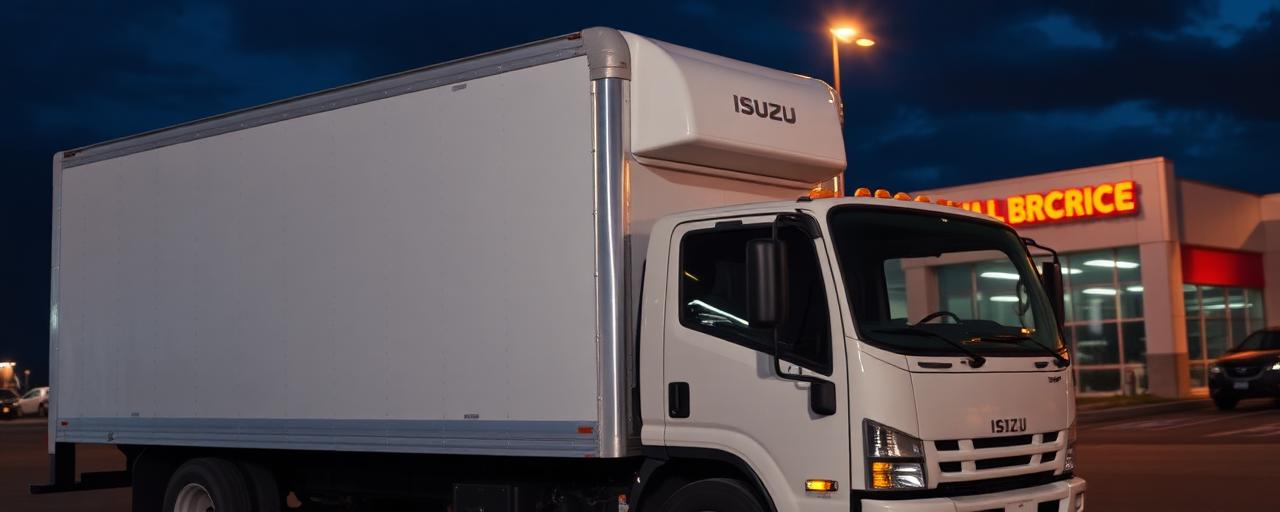
The comparison at 60 months, $52k used 2019 Isuzu FTR
| Structure | Monthly | Total paid | You own at end? |
|---|---|---|---|
| Cash | $0 | $52,000 (day 1) | Yes |
| Financed (12%, 60mo, 20% down) | $925 | $65,900 | Yes |
| TRAC lease ($1 buyout, 60 mo) | $1,050 | $63,000 | Yes (pay $1) |
| Operating lease (60 mo) | $2,100 | $126,000 | No |
The operating lease costs twice as much and you own nothing at the end. Every dollar of that difference should have been going into your maintenance reserve, a second truck down payment, or your emergency fund.
The recommendation for a first truck
- If you have $50k+ liquid: buy cash, keep $15k reserves.
- If you have $10–20k liquid: finance 60 months at 20% down with a legit lender.
- If you have < $10k and good W-2 income: wait 3–6 months, save more, or start driving for a carrier while you save. Do not lease-trap yourself.
Action items
- Pull your personal credit score (free at annualcreditreport.com)
- Get pre-approved with at least 2 lenders — you'll know your real rate
- Calculate the payment in the Cost-per-mile calculator with your real rate
- Say no to any "$0 down, drive today" pitch until you understand exactly what it costs
Next: The spec sheet — the exact truck you should buy for your freight type.